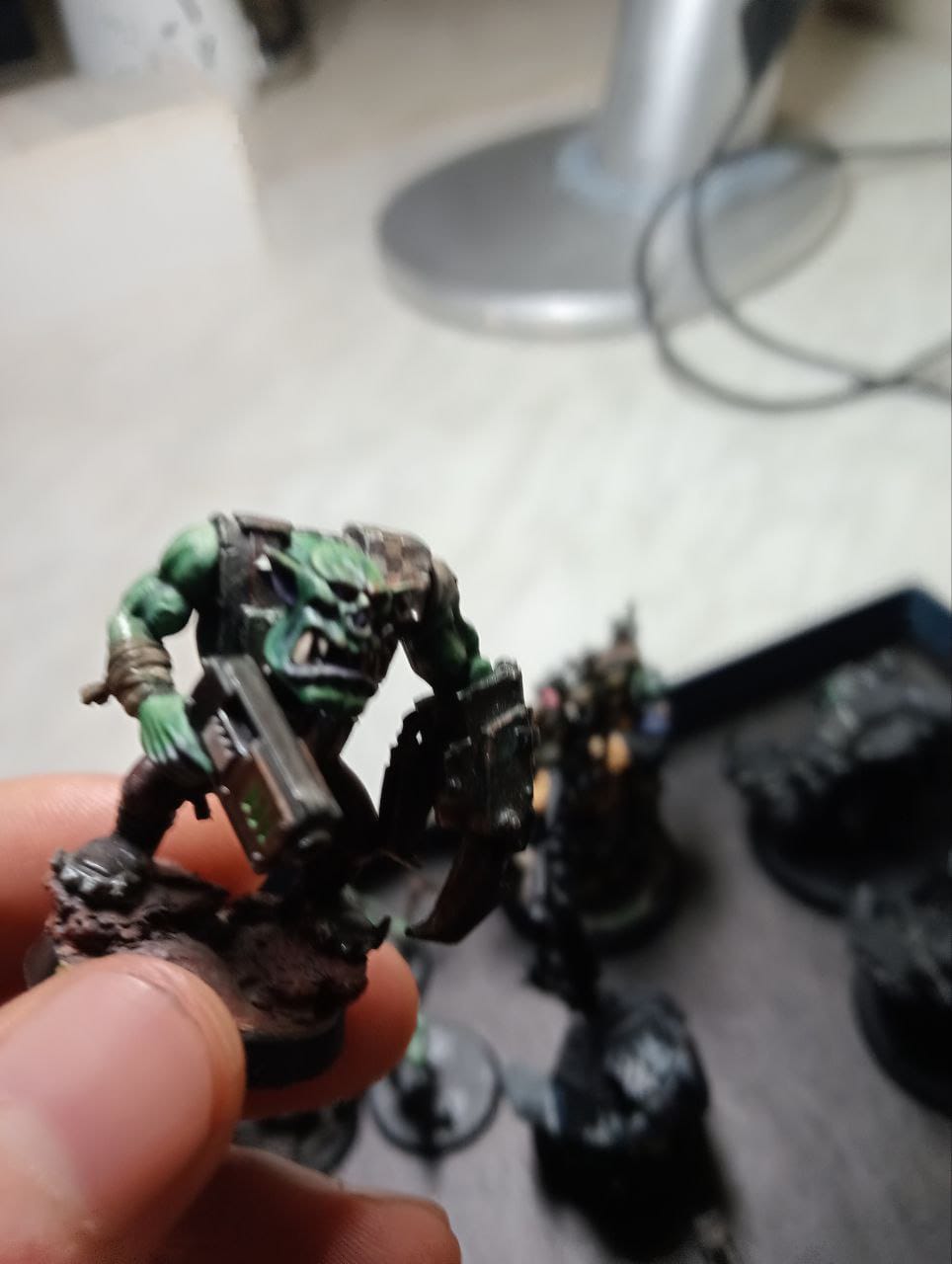
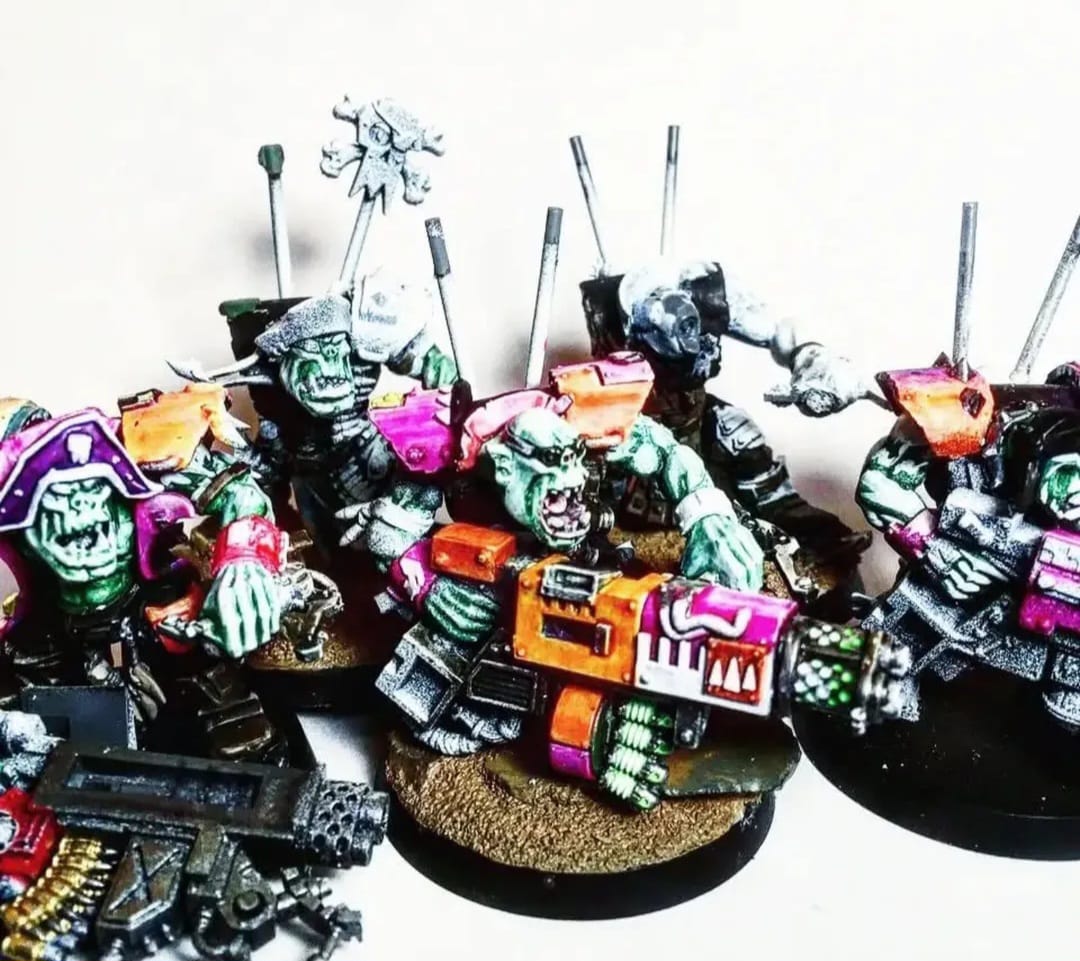
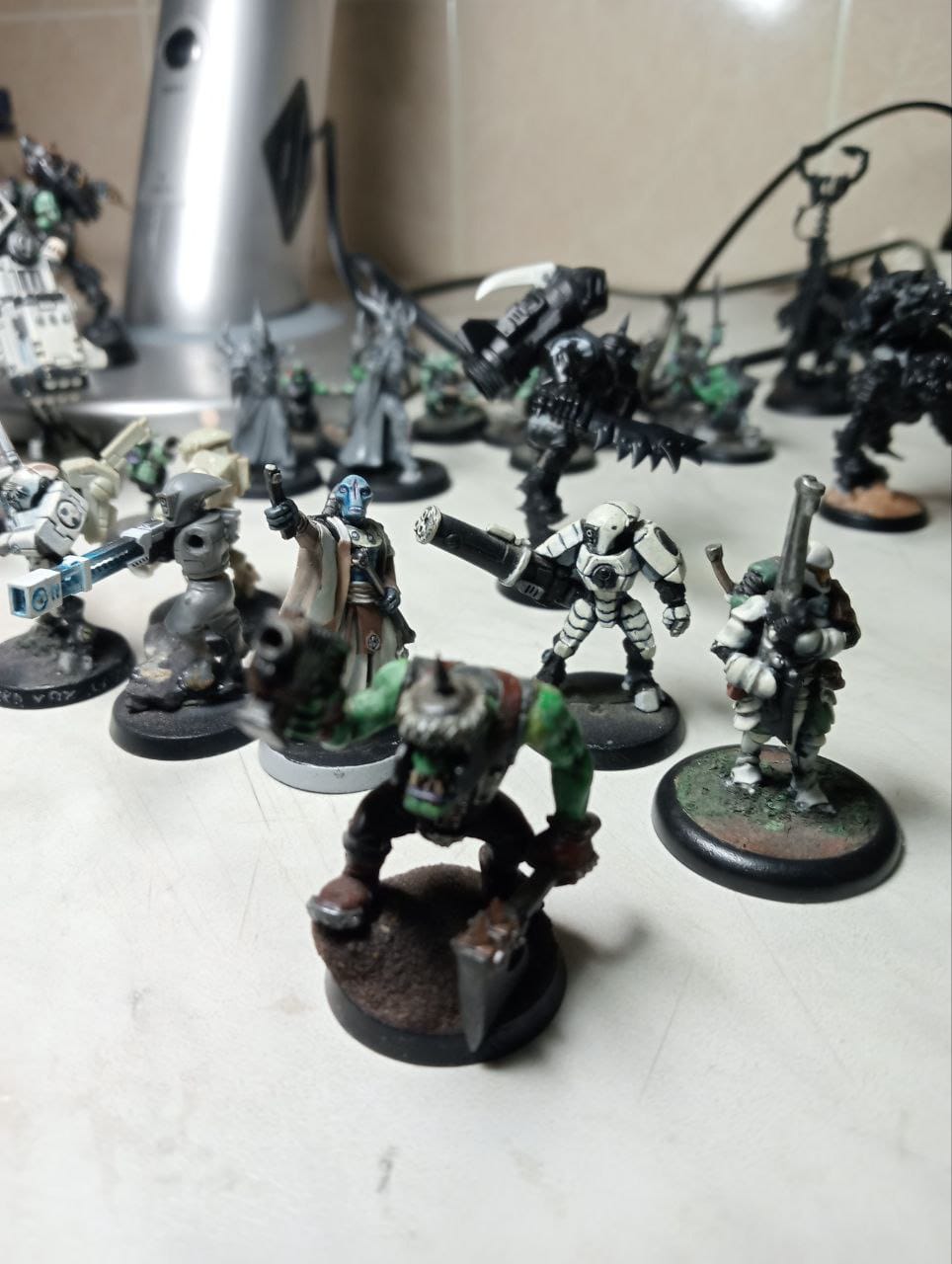
Orks
They fight because they believe they can, and their belief makes it real.
The Orks are a virulent, war-fueled species that infests the galaxy, viewing existence as one endless, glorious battle. Born from the ancient genetic experiments of the Old Ones and twisted by the psychic resonance of their own collective belief, they thrive on violence, chaos, and crude technology. Unlike other factions driven by conquest or survival, the Orks fight simply because it is their nature; a good scrap provides them with sustenance, joy, and purpose.
- Species
- Orkoid
- Primary Motivation
- Constant Warfare (Waaagh!)
- Society Structure
- Might Makes Right Hierarchy
- Technology Level
- Crude but Psychically Resonant
Lore & Background
Biologically, Orks reproduce through spores that are constantly shed into the environment and germinate rapidly in soil rich with organic matter and psychic energy, allowing their numbers to swell quickly without needing conflict as a trigger. They possess no concept of peace or diplomacy; if they are not fighting an enemy, they will inevitably turn on each other in internecine strife until a new warlord unites them under a single banner. This cycle of endless violence ensures that the galaxy never sees rest from their green tide, as every defeat merely provides more biomass for the next generation of warriors.
In Their Own Story
The earth didn't just shake; it convulsed under the thunderous stomp of ten thousand greenskins, a green tide surging across the shattered plains of Cadia. Grommash, a Boy with a chipped tooth and a chain-choppa held together by rust and sheer hope, screamed until his lungs burned, rallying the mob behind him. Above, the sky choked on smoke and the deafening roar of Dakka-jets; below, the air reeked of ozone, crude oil, and wet fur. 'WAAAGH!' Grommash bellowed, raising his weapon as a wall of red-painted tanks sputtered to life—engines that shouldn't have worked, roaring forward solely because every Ork in sight believed they would. The enemy lines didn't crumble from tactics; they were erased under the sheer, unadulterated weight of an army that refused to die, driven by a madness that turned rust into steel and belief into physics.
Reader's Guide
Orks are biological jack-of-all-trades nightmares: resilient enough to laugh off wounds that would liquefy a human, their bodies knitting together with terrifying speed. Their technology is a grotesque masterpiece of scavenged scrap and crude welding, yet it functions with supernatural reliability because the collective psychic field of the WAAAGH! forces broken engines to run and rusty guns to fire. In the galactic grand scheme, they are an unstoppable hammer, clashing indiscriminately with the Imperium, Chaos, and Xenos alike. They possess no morality—neither evil nor good—only a singular, driving purpose: to turn every corner of existence into a battlefield waiting for the next fight.
Did You Know?
- Orks believe that painting their vehicles red makes them go faster, and due to their collective psychic field, this actually happens.
- Ork biology is incredibly resilient, but they cannot regenerate entire limbs from nearby spores; severed parts simply die unless reattached quickly by a medic or the Ork's own crude surgery.
- The Ork language, known as 'Grot' or 'Orky', does not translate itself for other species; it requires translation devices or learned speakers to understand its guttural nuances and slang.
- Orks do not have a concept of peace; they will fight each other just as eagerly as they fight enemies if no external threat exists.
Origins and Genre Definition
Warhammer 40,000 emerged from Games Workshop as a science-fiction counterpart to their medieval fantasy wargame, Warhammer Fantasy Battle. Although the two settings share thematic DNA and character archetypes, they exist as entirely independent fictional universes. First published in September 1987, the game has evolved through eleven editions, with the current version released in June 2026. It is widely recognized as the most popular miniature wargame globally, holding particular cultural significance within the United Kingdom. The setting describes a stagnant human civilization besieged by hostile aliens and supernatural entities, establishing a tone that defined the grimdark genre of speculative fiction. This literary classification was directly inspired by the series' famous tagline regarding the eternal war in the far future. The depth of this fictional world has been expanded significantly through novels published by Black Library, creating a rich narrative backdrop that supports the tabletop mechanics and distinguishes it from other gaming systems.
The Hobbyist Experience
Participating in Warhammer 40,000 involves a significant investment beyond simple gameplay, as Games Workshop sells model parts rather than ready-to-play figures. Players must purchase boxes of polystyrene components, occasionally lead-free pewter or resin for rare items, and then assemble and paint them manually. This creative process is central to the hobby; many enthusiasts buy models solely to display their artistic work, often spending weeks preparing a single army before it becomes playable. The financial barrier to entry is notable, with new players facing costs of at least £200 just for basic materials like glue, paints, and dice. Tournament-level armies can cost multiples of this amount. This dedication transforms the game into a blend of artistic craftsmanship and strategic competition, where the visual presentation of the miniature warriors and vehicles is as important as their statistical capabilities on the battlefield.
Gameplay Mechanics and Terrain
The core gameplay simulates battles between diverse factions using dice rolls and simple arithmetic to resolve conflicts. Unlike grid-based systems such as BattleTech, this game requires players to measure distances in inches using a tape measure, adding a layer of physical precision to tactical movement. The battlefield is not fixed; instead, participants construct custom environments using modular terrain features like hills, buildings, and trees. While Games Workshop offers proprietary terrain models, the community frequently utilizes generic or homemade scenery to create unique playing fields. Official rules recommend specific table dimensions based on army size, ensuring a balanced arena for combat. During matches, players declare their selected units from datasheets before play begins, locking in their forces and preventing mid-game additions. This structure emphasizes pre-match preparation and strategic planning over reactive adjustments.
Tournament Regulations and Factions
Official competitions enforce strict adherence to Games Workshop's intellectual property, mandating that all models used must be officially produced and properly assembled to match the player's roster. Substitute models are generally prohibited; for instance, an Ork Weirdboy unit requires a specific Games Workshop model of that character. While some flexibility exists for 'kitbashed' creations combining official parts with modeling putty like Green Stuff, these hybrids must remain easily identifiable and adhere to strict composition ratios regarding original plastic content. Furthermore, the use of 3D-printed miniatures is explicitly banned in sanctioned events. These regulations ensure a level playing field where victory depends on strategy rather than custom manufacturing advantages. The game features a vast array of datasheets allowing players to customize their armies with specific weapons and attachments, fostering endless variety within the rigid framework of tournament rules.
Gallery